
Top Corporate Learning and Digital Learning Companies by Revenue (2026)
Corporate learning has become one of the most important investments for organizations seeking sustainable growth. The modern workplace requires employees to continuously develop new skills in areas such as artificial intelligence, cybersecurity, cloud computing, data analytics, leadership, digital transformation, and industry-specific technologies.
Earlier corporate training models relied heavily on instructor-led classrooms and static training materials. Today, companies expect learning solutions to be:
- Digital-first
- Personalized
- Accessible globally
- Data-driven
- Integrated with HR technology
- Measurable through analytics
Corporate learning companies now provide a broad range of services, including:
- Instructional design
- Custom eLearning development
- Learning Management Systems (LMS)
- Learning Experience Platforms (LXP)
- Leadership development
- Technical training
- Professional certifications
- Compliance learning
- Skills assessment
- Learning analytics
- Managed learning services
Large organizations increasingly view learning as a competitive advantage because employee skills directly influence innovation, productivity, and business performance.
Why Revenue Is Used as the Ranking Basis
Revenue is one of the most measurable indicators for comparing corporate learning organizations.
A higher revenue base generally indicates:
- Larger customer relationships
- Greater global presence
- More investment capacity
- Broader product portfolios
- Stronger operational infrastructure
- Ability to support enterprise-scale projects
However, revenue does not automatically mean better learning outcomes. A smaller specialist instructional design company may provide excellent solutions for a specific industry or learning requirement.
This ranking answers the question:
“Which corporate learning companies have the largest publicly reported business scale?”
It does not answer:
“Which company provides the highest-quality instructional design?”
For vendor selection, organizations should evaluate additional factors such as learning effectiveness, technology capabilities, customer reviews, innovation, industry expertise, and implementation support.
Revenue Data Sources and Methodology
Methodology
Companies included in this ranking were selected based on the following criteria:
| 1 | The company operates in corporate learning, workforce development, digital education, professional training, or enterprise learning technology. |
| 2 | The company publishes publicly available financial information. |
| 3 | Revenue figures are taken from official financial disclosures. |
| 4 | Companies are ranked based on reported annual revenue. |
The analysis excludes:
- Private instructional design agencies without disclosed revenue
- Companies with only estimated revenue figures
- Organizations where revenue cannot be independently verified
Revenue Source Information
The revenue data used in this article comes from official company disclosures, including:
- Annual reports
- Investor relations reports
- SEC Form 10-K filings
- Regulatory financial statements
The primary sources include:
| Company | Revenue Source |
|---|---|
| Pearson | Pearson Annual Report & Accounts |
| McGraw Hill | McGraw Hill financial reporting and investor disclosures |
| Stride | Stride Annual Report and SEC Form 10-K |
| Wiley | Wiley Annual Report and SEC Form 10-K |
| Udemy | Udemy Annual Report and SEC Form 10-K |
| Coursera | Coursera Annual Report and SEC Form 10-K |
| Learning Technologies Group | LTG Annual Report and Financial Statements |
| Skillsoft | Skillsoft Annual Report and SEC Form 10-K |
| NIIT Learning Systems | NIIT Learning Systems Annual Report |
| FranklinCovey | FranklinCovey Annual Report and SEC Form 10-K |
Top Corporate Learning Companies by Revenue Ranking
| Rank | Company | Reported Revenue | Fiscal Year / Reporting Period | Revenue Source |
|---|---|---|---|---|
| 1 | Pearson | Approximately $4.8–5.0 billion | FY2025 Annual Report | Pearson Annual Report & Accounts |
| 2 | McGraw Hill | Approximately $2.1 billion | FY2026 Financial Results | McGraw Hill Financial Reporting |
| 3 | Stride | More than $2 billion | FY2025 Annual Report | Stride Form 10-K |
| 4 | Wiley | Approximately $1.67 billion | FY2025 Annual Report | Wiley Form 10-K |
| 5 | Udemy | Approximately $780 million | FY2025 Annual Report | Udemy Form 10-K |
| 6 | Coursera | Approximately $700 million | FY2025 Annual Report | Coursera Form 10-K |
| 7 | Learning Technologies Group (LTG) | Approximately $700–760 million equivalent | FY2025 Annual Report | LTG Annual Report |
| 8 | Skillsoft | Approximately $530 million | FY2025 Annual Report | Skillsoft Form 10-K |
| 9 | NIIT Learning Systems | Approximately $330–350 million | FY2025 Annual Report | NIIT Learning Systems Annual Report |
| 10 | FranklinCovey | Approximately $285–300 million | FY2025 Annual Report | FranklinCovey Form 10-K |
Revenue comparison note: Companies follow different fiscal calendars. Some report calendar-year results, while others report based on different fiscal periods. Currency conversions are approximate and intended only for comparison.
Company Profiles
1. Pearson
Headquarters: London, United Kingdom
Website: https://www.pearson.com
Reported Revenue: Approximately $4.8–5.0 billion
Source: Pearson Annual Report & Accounts FY2025
Overview
Pearson is one of the world’s largest education and learning companies. Founded in 1844, the organization has evolved from traditional educational publishing into a global digital learning provider.
While Pearson is widely known for academic education, the company has expanded significantly into professional learning, workforce development, assessment, and certification.
Its corporate learning solutions help organizations build employee capabilities through digital content, assessments, and skills development programs.
Corporate Learning Services
Pearson provides:
- Professional certifications
- Workforce assessments
- Digital learning platforms
- Career development programs
- Skills measurement
- Language learning
- Online education solutions
Technology Focus
Pearson has invested heavily in:
- Artificial intelligence
- Adaptive learning
- Digital assessments
- Personalized learning pathways
- Learning analytics
These technologies enable organizations to understand employee capabilities and deliver targeted development programs.
Market Position
Pearson’s scale, global reach, and extensive learning ecosystem make it one of the largest organizations operating in the broader corporate learning market.
2. McGraw Hill
Headquarters: Columbus, Ohio, USA
Website: https://www.mheducation.com
Reported Revenue: Approximately $2.1 billion
Source: McGraw Hill Financial Results
Overview
McGraw Hill has been a major force in learning and educational content for more than a century. The company has transitioned from traditional publishing into digital learning technology.
Its solutions support schools, universities, businesses, and professional learners.
Corporate Learning Services
McGraw Hill offers:
- Digital learning platforms
- Professional education
- Workforce training resources
- Certification preparation
- Adaptive learning solutions
- Assessment technology
Innovation Strategy
The company continues to invest in:
- AI-powered learning tools
- Personalized education
- Data analytics
- Digital content delivery
McGraw Hill’s large content library and technology capabilities allow it to serve organizations requiring scalable learning solutions.
3. Stride, Inc.
Headquarters: Reston, Virginia, USA
Official Website: https://www.stridelearning.com
Reported Revenue: More than US$2 billion
Fiscal Year: FY2025 (Year ended June 30, 2025)
Revenue Source: Stride, Inc. FY2025 Annual Report (SEC Form 10-K)
Company Overview
Stride, Inc. is a publicly traded education technology company best known for online education and career-focused learning programs. Although its business includes K–12 education, the company has significantly expanded into workforce development, career readiness, and professional skills training.
Stride’s corporate learning initiatives help prepare learners for high-demand careers through industry certifications, technical education, and employer-aligned training programs.
Its continued investment in career-focused education has contributed to consistent revenue growth.
Corporate Learning Services
Stride provides:
- Career and technical education (CTE)
- Workforce readiness programs
- Industry certification preparation
- Professional development
- Digital learning platforms
- Skills assessment
- Career pathway solutions
Competitive Advantages
Stride differentiates itself through:
- Strong digital learning infrastructure
- Workforce-aligned curriculum
- Employer partnerships
- Career certification programs
- Nationwide online education network
As organizations increasingly seek job-ready talent, Stride’s workforce development initiatives continue to expand.
4. Wiley (John Wiley & Sons)
Headquarters: Hoboken, New Jersey, USA
Official Website: https://www.wiley.com
Reported Revenue: Approximately US$1.67 billion
Fiscal Year: FY2025 (Year ended April 30, 2025)
Revenue Source: Wiley FY2025 Annual Report (SEC Form 10-K)
Company Overview
Founded in 1807, Wiley is one of the oldest knowledge companies in the world. While traditionally recognized for academic publishing, Wiley has developed a significant presence in professional education and corporate learning.
The company partners with businesses, universities, governments, and research organizations to deliver workforce education and professional certification programs.
Corporate Learning Services
Wiley offers:
- Professional certifications
- Leadership development
- Technical training
- Digital learning solutions
- Continuing education
- Workforce upskilling
- Compliance learning
Technology Investments
The company continues investing in:
- Digital course delivery
- Learning analytics
- AI-assisted learning
- Online certification platforms
- Skills development technologies
Industries Served
Wiley supports organizations across:
- Healthcare
- Engineering
- Finance
- Information Technology
- Life Sciences
- Manufacturing
Its combination of educational content and professional learning has helped establish Wiley as one of the largest publicly reporting learning companies.
5. Udemy
Headquarters: San Francisco, California, USA
Official Website: https://www.udemy.com
Reported Revenue: Approximately US$780 million
Fiscal Year: FY2025 (Year ended December 31, 2025)
Revenue Source: Udemy FY2025 Annual Report (SEC Form 10-K)
Company Overview
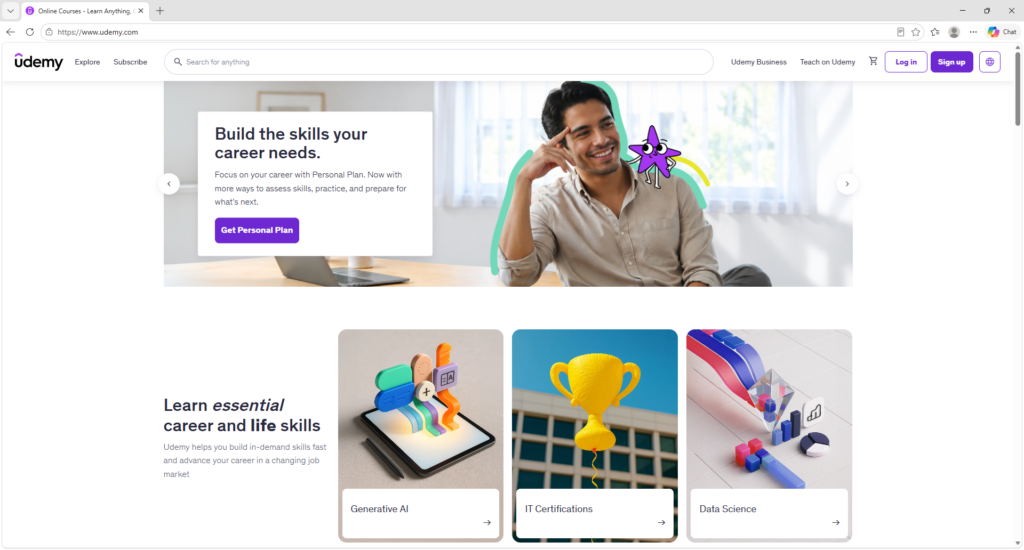
Udemy operates one of the world’s largest online learning marketplaces, serving millions of learners across more than 180 countries.
While originally focused on individual learners, the company’s enterprise platform—Udemy Business—has become a major driver of revenue growth.
Organizations subscribe to curated learning libraries covering technical, business, and leadership skills.
Enterprise Learning Portfolio
Udemy Business includes:
- Technical training
- Leadership development
- AI skills
- Software development
- Cybersecurity
- Cloud computing
- Data analytics
- Business communication
Platform Strengths
Udemy’s enterprise platform provides:
- Skills analytics
- Learning paths
- Certification preparation
- Mobile learning
- AI-powered recommendations
- Progress dashboards
Thousands of organizations rely on Udemy Business to support continuous employee development.
6. Coursera
Headquarters: Mountain View, California, USA
Official Website: https://www.coursera.org
Reported Revenue: Approximately US$700 million
Fiscal Year: FY2025 (Year ended December 31, 2025)
Revenue Source: Coursera FY2025 Annual Report (SEC Form 10-K)
Company Overview
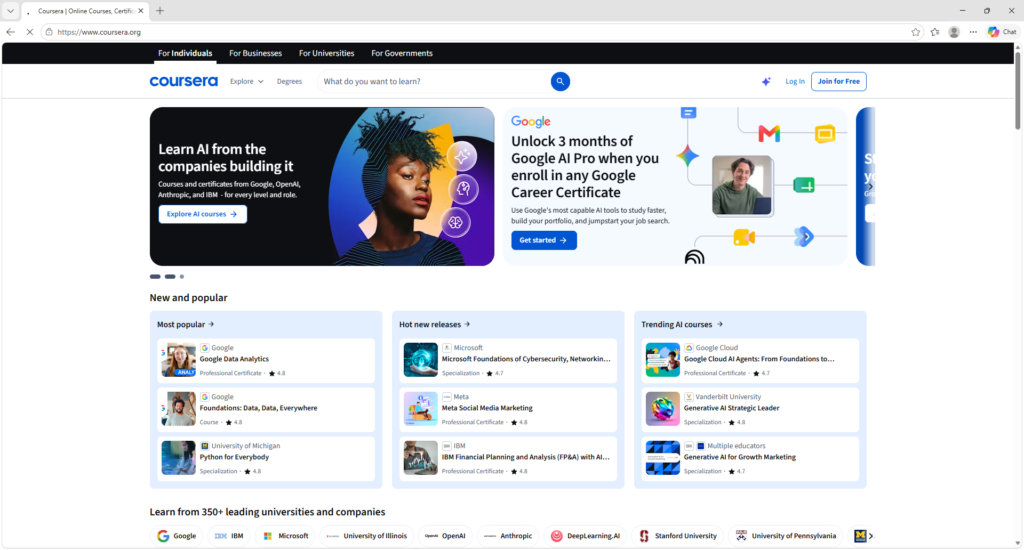
Coursera has become one of the largest online learning platforms globally, partnering with universities, technology companies, and governments.
Its enterprise solution, Coursera for Business, enables organizations to provide employees with university-quality education and professional certificates.
Corporate Learning Solutions
Coursera provides:
- Leadership training
- Artificial Intelligence
- Machine Learning
- Cloud Computing
- Data Science
- Cybersecurity
- Project Management
- Business Analytics
Enterprise Customers
The platform serves organizations across:
- Technology
- Healthcare
- Banking
- Manufacturing
- Government
- Telecommunications
Competitive Advantages
Coursera combines:
- University partnerships
- Industry-recognized certificates
- AI-powered learning
- Skills benchmarking
- Hands-on labs
Its strong enterprise growth has positioned the company among the leading digital corporate learning providers.
7. Learning Technologies Group (LTG)
Headquarters: London, United Kingdom
Official Website: https://www.ltgplc.com
Reported Revenue: Approximately £560–600 million (approximately US$700–760 million equivalent)
Fiscal Year: FY2025 (Year ended December 31, 2025)
Revenue Source: Learning Technologies Group FY2025 Annual Report
Company Overview
Learning Technologies Group (LTG) is one of the largest workplace learning technology companies globally.
Through strategic acquisitions, LTG has developed a comprehensive portfolio of learning businesses, including:
- GP Strategies
- LEO Learning
- Rustici Software
- Watershed
- PeopleFluent
- Breezy HR
- Eukleia
Together, these businesses provide learning technology, instructional design, talent management, compliance training, and analytics solutions.
Core Services
LTG offers:
- Learning consulting
- Instructional design
- Learning technologies
- Learning Record Stores (LRS)
- SCORM and xAPI solutions
- Compliance training
- Leadership development
Market Position
LTG is recognized for combining technology platforms with learning content and enterprise consulting services.
Its acquisition strategy has enabled the company to become one of the largest enterprise learning providers globally.
8. Skillsoft
Headquarters: Nashua, New Hampshire, USA
Official Website: https://www.skillsoft.com
Reported Revenue: Approximately US$530 million
Fiscal Year: FY2025 (Fiscal year ended January 31, 2025)
Revenue Source: Skillsoft FY2025 Annual Report (SEC Form 10-K)
Company Overview
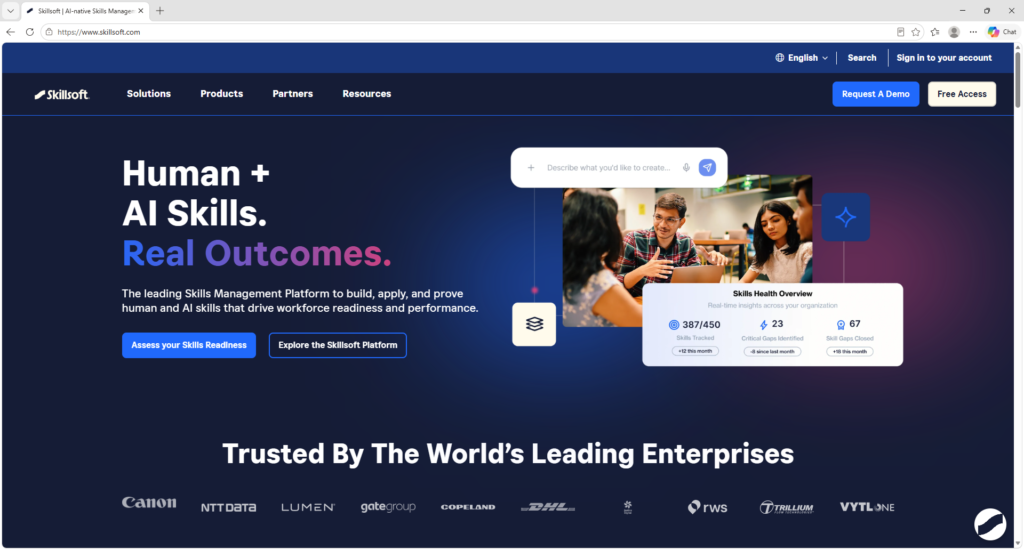
Skillsoft specializes exclusively in corporate learning.
Unlike traditional publishers, the company focuses almost entirely on enterprise workforce development.
Its digital learning ecosystem supports technical, leadership, compliance, and professional skills development.
Learning Solutions
Skillsoft offers:
- Leadership development
- Compliance training
- Technology skills
- Cybersecurity
- Cloud computing
- AI learning
- Executive coaching
- Certification preparation
Platform Features
Organizations benefit from:
- Personalized learning journeys
- Skills benchmarking
- Learning analytics
- AI recommendations
- Digital badges
- Certification tracking
Skillsoft continues investing heavily in AI-powered workforce learning.
9. NIIT Learning Systems Limited
Headquarters: Atlanta, Georgia, USA (Global Corporate Learning Business)
Official Website: https://www.niit.com
Reported Revenue: Approximately US$330–350 million
Fiscal Year: FY2025 (Year ended March 31, 2025)
Revenue Source: NIIT Learning Systems FY2025 Annual Report
Company Overview
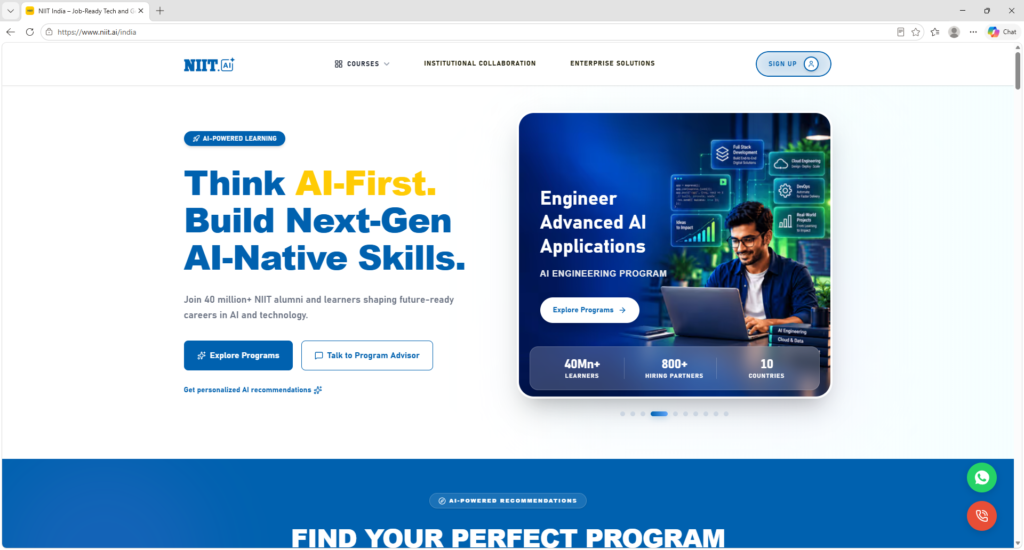
NIIT Learning Systems is one of the world’s leading Managed Learning Services (MLS) providers.
Many Fortune 500 companies outsource their complete learning operations to NIIT.
The company’s capabilities include learning consulting, instructional design, technology management, content development, and learning administration.
Service Portfolio
NIIT provides:
- Managed Learning Services
- Instructional design
- Digital learning
- Curriculum development
- Learning consulting
- Leadership development
- Compliance education
Recent Growth
The acquisition of SweetRush expanded NIIT’s capabilities in:
- Custom eLearning
- Immersive learning
- Scenario-based learning
- Learning experience design
This acquisition strengthened NIIT’s position in the global corporate learning market.
10. FranklinCovey
Headquarters: Salt Lake City, Utah, USA
Official Website: https://www.franklincovey.com
Reported Revenue: Approximately US$285–300 million
Fiscal Year: FY2025 (Fiscal year ended August 31, 2025)
Revenue Source: FranklinCovey FY2025 Annual Report (SEC Form 10-K)
Company Overview
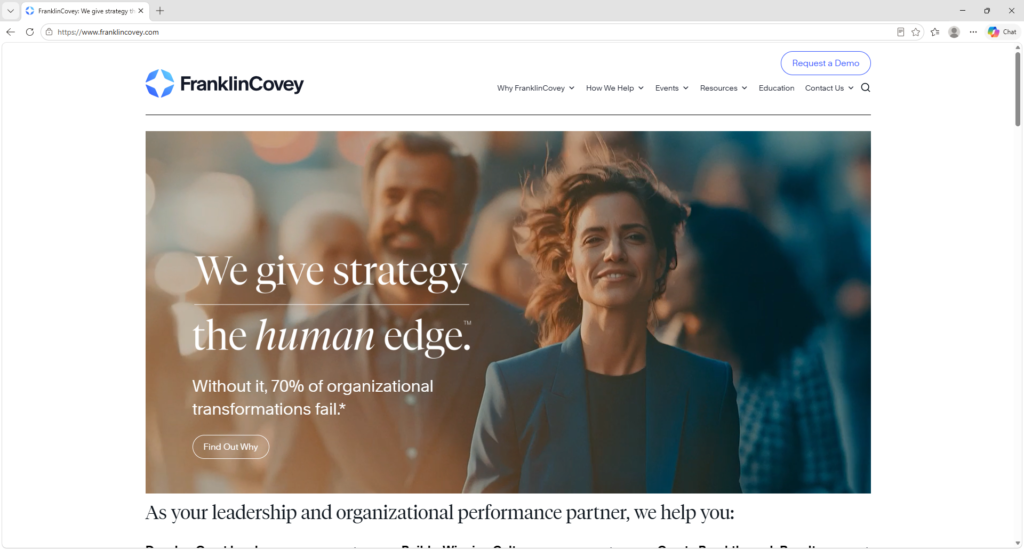
FranklinCovey specializes in leadership development, organizational effectiveness, and performance improvement.
The company is internationally recognized for leadership frameworks based on the work of Stephen R. Covey.
Learning Solutions
FranklinCovey delivers:
- Leadership development
- Executive coaching
- Organizational culture
- Sales performance
- Employee engagement
- Digital learning
- Project execution
Competitive Strength
Its subscription-based All Access Pass provides organizations with unlimited access to:
- Online courses
- Videos
- Assessments
- Coaching
- Facilitator resources
- Learning analytics
FranklinCovey serves thousands of organizations worldwide, including many Fortune 500 companies.
Revenue Comparison Analysis
Several key observations emerge from this revenue ranking:
- Pearson, McGraw Hill, and Stride generate multibillion-dollar annual revenues, reflecting their broad education and workforce learning portfolios.
- Udemy and Coursera have rapidly expanded through subscription-based enterprise learning platforms, making them major players in digital workforce development.
- LTG and NIIT Learning Systems differentiate themselves through managed learning services, instructional design, and enterprise consulting.
- Skillsoft remains one of the few public companies focused almost entirely on corporate learning and workforce development.
- FranklinCovey occupies a specialized niche centered on leadership development and organizational performance.
These companies collectively illustrate how the corporate learning market has shifted from traditional training providers to integrated digital learning ecosystems that combine content, technology, analytics, and consulting.
The State of the Corporate Learning Market
Corporate learning has evolved from a support function into a strategic business investment. Organizations across industries are facing rapid technological disruption, changing workforce expectations, and increasing competition for skilled talent. As a result, employee learning and development (L&D) has become a boardroom priority rather than solely an HR initiative.
According to multiple industry reports, global spending on corporate training continues to rise as organizations seek to address skill shortages, improve employee engagement, and accelerate digital transformation. Learning investments now extend beyond compliance training to include leadership development, technical upskilling, professional certifications, and AI literacy.
Large corporate learning companies are responding by expanding their portfolios through acquisitions, AI-powered technologies, and cloud-based learning platforms. The result is a highly competitive market where enterprises expect measurable business outcomes from every learning investment.
Key Industry Trends
1. Artificial Intelligence Is Reshaping Learning
AI has become one of the most significant drivers of innovation in corporate learning. Rather than replacing instructional designers, AI is increasingly used to enhance content creation, personalize learning experiences, and automate administrative tasks.
Leading providers such as Pearson, Skillsoft, Coursera, Udemy, and Wiley have introduced AI-powered features that help organizations:
- Recommend personalized learning paths
- Identify workforce skill gaps
- Generate assessments
- Create learning content more efficiently
- Improve learner engagement
- Provide intelligent coaching and feedback
AI also enables organizations to analyze employee performance data and recommend targeted learning interventions, improving both learning effectiveness and business outcomes.
2. Skills-Based Learning Has Become the New Standard
Organizations are shifting from degree-based hiring and promotion toward skills-based workforce development. As a result, corporate learning providers now emphasize measurable competencies rather than simply course completion.
Modern enterprise learning platforms include:
- Skills taxonomies
- Competency frameworks
- Skills assessments
- Digital badges
- Professional certifications
- Role-based learning pathways
This approach enables organizations to align employee development with strategic workforce planning.
3. Subscription-Based Learning Models Continue to Grow
Traditional one-time training purchases are increasingly being replaced by annual enterprise subscriptions.
Subscription models provide organizations with:
- Unlimited course access
- Continuous content updates
- Predictable budgeting
- Higher employee engagement
- Better learning analytics
Companies such as Udemy, Coursera, Skillsoft, and FranklinCovey have experienced significant growth through recurring subscription revenue.
4. Learning Analytics Is Driving Better Decision-Making
Organizations increasingly expect learning investments to demonstrate measurable business value.
Modern analytics platforms track metrics such as:
- Course completion rates
- Certification achievement
- Employee skill progression
- Learning engagement
- Productivity improvements
- Compliance performance
- Return on investment (ROI)
These insights enable executives to connect learning initiatives with broader business objectives.
5. Managed Learning Services Continue to Expand
Many global enterprises now outsource all or part of their learning operations to specialized providers.
Managed Learning Services (MLS) typically include:
- Learning strategy
- Curriculum design
- Instructional design
- Content development
- Learning administration
- LMS management
- Vendor management
- Analytics and reporting
Companies such as NIIT Learning Systems and Learning Technologies Group have built substantial businesses around this outsourcing model.
6. Continuous Learning Is Becoming a Competitive Advantage
Rapid technological change means employees must continuously acquire new skills throughout their careers.
Organizations increasingly invest in learning programs covering:
- Artificial Intelligence
- Cybersecurity
- Cloud Computing
- Data Analytics
- Leadership
- Project Management
- Software Development
- Digital Transformation
Corporate learning providers are expanding their content libraries to meet these evolving workforce needs.
How Enterprises Select Corporate Learning Partners
While revenue indicates market size, organizations typically evaluate corporate learning providers using several additional criteria.
Industry Expertise
Many enterprises prefer providers with experience in regulated industries such as healthcare, financial services, manufacturing, energy, and government.
Industry-specific knowledge helps ensure training content aligns with business requirements and regulatory standards.
Instructional Design Capability
Effective learning depends on sound instructional design.
Leading providers employ specialists experienced in methodologies such as:
- ADDIE
- SAM (Successive Approximation Model)
- Bloom’s Taxonomy
- Design Thinking
- Adult Learning Theory
- Scenario-Based Learning
High-quality instructional design improves learner engagement and knowledge retention.
Technology Ecosystem
Enterprise buyers increasingly expect learning solutions to integrate with existing business systems, including:
- Learning Management Systems (LMS)
- Learning Experience Platforms (LXP)
- Human Capital Management (HCM) systems
- HR Information Systems (HRIS)
- Collaboration platforms
- Analytics tools
Seamless integration improves user experience and simplifies reporting.
Global Delivery Capability
Multinational organizations often require:
- Multilingual learning content
- Localization
- Regional compliance expertise
- Global instructor networks
- 24/7 technical support
Larger providers typically possess the infrastructure required to support global learning initiatives.
Innovation
Organizations increasingly evaluate vendors based on innovation in areas such as:
- Artificial Intelligence
- Virtual Reality (VR)
- Augmented Reality (AR)
- Adaptive Learning
- Skills Intelligence
- Learning Analytics
- Mobile Learning
Providers that invest in emerging technologies are often better positioned to support future workforce development needs.
Frequently Asked Questions
Which company has the highest reported revenue?
Among the companies included in this analysis, Pearson reports the highest annual revenue, followed by McGraw Hill and Stride.
Why aren’t AllenComm, SweetRush, ELB Learning, Allen Interactions, or Roundtable Learning included?
These companies are well-known in the instructional design and custom eLearning industry. However, they are privately held and do not publicly disclose audited annual revenue. Since this article ranks companies solely by publicly reported revenue, they were excluded to maintain transparency and accuracy.
Does higher revenue mean a better learning provider?
No.
Revenue indicates business size, market presence, and financial scale. It does not directly measure instructional quality, customer satisfaction, innovation, or learning effectiveness.
Organizations should evaluate vendors using multiple criteria, including expertise, technology, implementation capability, customer references, and learning outcomes.
Which companies focus exclusively on corporate learning?
Among the companies ranked, Skillsoft, NIIT Learning Systems, Learning Technologies Group, and FranklinCovey have the strongest focus on enterprise learning and workforce development.
Other companies, such as Pearson, Wiley, McGraw Hill, Coursera, Udemy, and Stride, operate across broader education and professional learning markets while also serving enterprise customers.
Which companies are investing most heavily in AI?
Many leading providers have integrated AI into their learning platforms. Examples include:
- Pearson
- Skillsoft
- Coursera
- Udemy
- Wiley
AI is being used for adaptive learning, skills recommendations, content creation, learner analytics, and intelligent coaching.
Conclusion
The corporate learning industry continues to expand as organizations prioritize workforce development, digital transformation, and continuous learning. Publicly reported revenue offers a useful measure of company scale and financial strength, helping organizations understand which providers have established significant market presence.
Based on publicly available financial information, Pearson, McGraw Hill, Stride, Wiley, Udemy, Coursera, Learning Technologies Group, Skillsoft, NIIT Learning Systems, and FranklinCovey represent some of the largest corporate learning organizations serving enterprises worldwide.
While revenue is an important indicator, it should not be the only consideration when selecting a corporate learning partner. Enterprises should also evaluate instructional design expertise, technology capabilities, implementation support, customer success, innovation, and alignment with organizational goals.
As artificial intelligence, skills-based learning, and personalized development continue to reshape workplace education, these organizations are likely to remain influential in defining the future of corporate learning.
References
The revenue figures and company information presented in this article are based primarily on official financial disclosures and investor resources.
| Company | Fiscal Year Used | Official Revenue Source | Website |
|---|---|---|---|
| Pearson | FY2025 | Pearson Annual Report & Accounts 2025 | https://www.pearson.com/investors |
| McGraw Hill | FY2026 | McGraw Hill FY2026 Financial Results | https://investors.mheducation.com |
| Stride | FY2025 | Stride, Inc. Form 10-K | https://investors.stridelearning.com |
| Wiley | FY2025 | John Wiley & Sons Form 10-K | https://investors.wiley.com |
| Udemy | FY2025 | Udemy Form 10-K | https://investor.udemy.com |
| Coursera | FY2025 | Coursera Form 10-K | https://investor.coursera.com |
| Learning Technologies Group | FY2025 | Learning Technologies Group Annual Report | https://www.ltgplc.com/investors |
| Skillsoft | FY2025 | Skillsoft Form 10-K | https://investor.skillsoft.com |
| NIIT Learning Systems | FY2025 | NIIT Learning Systems Annual Report | https://www.niitmts.com/investors |
| FranklinCovey | FY2025 | FranklinCovey Form 10-K | https://investor.franklincovey.com |
Note
This ranking is based solely on publicly reported annual revenue available at the time of writing. Companies with undisclosed financial information or privately estimated revenue have been excluded. Revenue figures may vary over time due to updated annual reports, changes in fiscal periods, acquisitions, divestitures, or currency exchange rates. Readers are encouraged to consult the latest official filings for the most current financial information.