Creating Structured Learning Journeys
Organizations, educational institutions, and learning professionals increasingly recognize that meaningful learning does not occur through isolated training events or standalone courses. Instead, effective learning is a continuous process that unfolds over time through multiple experiences, opportunities for practice, reflection, reinforcement, and real-world application.
Traditional training programs often focus on delivering information during a single event, such as a workshop, webinar, or e-learning course. While these approaches may successfully transfer knowledge, they frequently fail to create lasting behavioral change or sustained performance improvement. Learners may complete a course, pass an assessment, and receive a certificate, yet struggle to apply what they learned in their daily work.
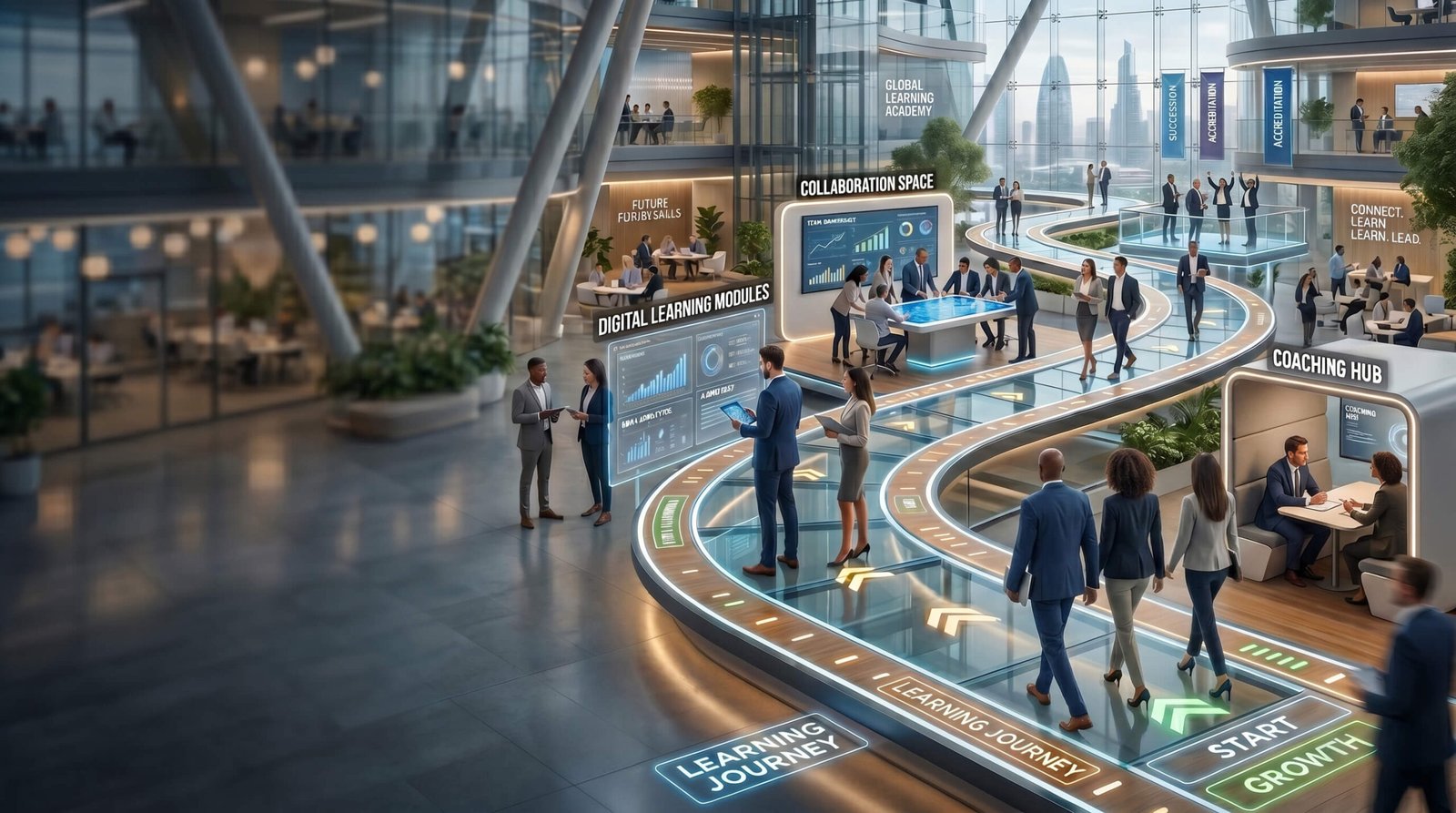
To address this challenge, learning professionals have increasingly adopted the concept of structured learning journeys. A learning journey is a carefully designed sequence of learning experiences that guides learners from their current level of capability to a desired state of competence or performance. Rather than treating learning as a one-time event, structured learning journeys view learning as an ongoing process that supports growth, mastery, and sustained application.
Creating structured learning journeys requires a strategic approach that combines instructional design principles, adult learning theory, learning experience design, performance support, coaching, assessment, and continuous reinforcement. The goal is to create coherent experiences that help learners acquire knowledge, develop skills, build confidence, and achieve measurable outcomes.
This article explores the principles, components, design process, implementation strategies, and best practices for creating structured learning journeys that drive meaningful learning and performance improvement.
What Is a Learning Journey?
A learning journey is a purposeful sequence of interconnected learning experiences designed to help learners achieve specific outcomes over time.
Unlike a single training event, a learning journey consists of multiple touchpoints that work together to support learning and performance.
These touchpoints may include:
- Formal training programs
- E-learning modules
- Coaching sessions
- Workshops
- Assessments
- Reflection activities
- Practice exercises
- Performance support tools
- Peer collaboration
- Social learning opportunities
A structured learning journey provides a roadmap that guides learners through a progression of development, ensuring that each experience builds upon previous learning and contributes to desired outcomes.
Why Structured Learning Journeys Matter
Organizations invest substantial resources in learning and development initiatives. However, research consistently shows that much of what learners acquire during training is forgotten within weeks if not reinforced and applied.
Several challenges contribute to this issue:
- Information overload
- Lack of reinforcement
- Limited opportunities for practice
- Insufficient application
- Poor alignment with job responsibilities
Structured learning journeys address these challenges by extending learning beyond a single event and creating opportunities for continuous development.
Benefits include:
Improved Knowledge Retention
Repeated exposure and reinforcement strengthen memory.
Greater Skill Development
Practice opportunities support mastery.
Increased Engagement
Varied learning experiences maintain learner interest.
Better Performance Outcomes
Learning becomes directly connected to workplace application.
Stronger Transfer of Learning
Learners apply new skills more effectively in real-world situations.
Structured learning journeys transform learning from an event into a process.
The Shift from Courses to Learning Journeys
Historically, training programs focused on delivering content.
The typical process involved:
1. Attending a course
2. Completing an assessment
3. Receiving a certificate
While this approach may support knowledge acquisition, it often falls short in achieving long-term performance improvement.
Modern learning design emphasizes continuous development.
Instead of asking:
“What course should we create?”
Learning professionals increasingly ask:
“What journey will help learners achieve the desired outcome?”
This shift reflects a broader understanding of how learning occurs.
Learning is not a destination.
It is a journey.
Structured Learning Journeys – Pretest
Based on: Creating Structured Learning Journeys – Villumis Blog
1. Which of the following best explains why traditional single-event training programs often fail to produce lasting performance improvement?
2. In the context of structured learning journeys, what is the primary purpose of conducting a baseline assessment before instruction begins?
3. Backward design, as applied to learning journey development, requires designers to begin the process by:
4. Which component of a structured learning journey is specifically designed to help learners access support resources at the exact moment they need to perform a task?
5. A learning journey designer creates detailed profiles of typical participants, including their job roles, skill gaps, time constraints, and career motivations. What is this practice called?
6. Why is reinforcement considered an essential component of a structured learning journey rather than an optional add-on?
7. According to the adult learning principles described in the article, which design approach would be most appropriate for a learning journey targeting experienced workplace professionals?
8. What distinguishes a structured learning journey from a traditional standalone training course?
9. An organization wants to evaluate whether its learning journey is producing real impact. Which category of metrics would provide the strongest evidence of business-level results?
10. Which of the following is identified as a common pitfall that can undermine the effectiveness of a structured learning journey during the design phase?
Key Principles of Structured Learning Journeys
Several foundational principles guide the design of effective learning journeys.
Outcome-Oriented Design
Every learning journey should begin with clearly defined outcomes.
Questions include:
- What should learners know?
- What should learners be able to do?
- What performance improvements are expected?
Desired outcomes drive all design decisions.
Learner-Centered Design
Learning journeys should reflect learner needs, preferences, and contexts.
Considerations include:
- Experience levels
- Job responsibilities
- Learning preferences
- Motivations
- Constraints
The learner remains at the center of the design process.
Continuous Learning
Learning should occur over time rather than in a single event.
Spacing learning experiences improves retention and application.
Application and Practice
Opportunities for practice are essential.
Learning journeys should enable learners to:
- Apply knowledge
- Develop skills
- Receive feedback
- Refine performance
Practice bridges the gap between learning and performance.
Reinforcement
Without reinforcement, learning fades quickly.
Structured learning journeys incorporate reminders, coaching, assessments, and follow-up activities to strengthen retention.
Components of a Structured Learning Journey
An effective learning journey typically includes several interconnected components.
1. Discovery and Awareness
The journey often begins by establishing relevance and motivation.
Activities may include:
- Introductory videos
- Awareness campaigns
- Self-assessments
- Leadership messages
The goal is to answer:
“Why does this matter?”
Motivation is critical for engagement.
2. Assessment and Baseline Measurement
Before instruction begins, learners should understand their current capabilities.
Methods include:
- Knowledge assessments
- Skill evaluations
- Surveys
- Performance reviews
Baseline data helps personalize learning experiences and measure progress.
3. Formal Learning Experiences
Formal learning provides foundational knowledge and skills.
Examples include:
- Instructor-led training
- Virtual classrooms
- E-learning modules
- Workshops
These experiences introduce key concepts and frameworks.
However, they represent only one part of the journey.
4. Practice and Application
Learning becomes meaningful through application.
Opportunities include:
- Simulations
- Case studies
- Projects
- Role-playing exercises
- Workplace assignments
Application strengthens understanding and develops competence.
5. Coaching and Mentoring
Support from experienced individuals accelerates development.
Benefits include:
- Personalized guidance
- Performance feedback
- Accountability
- Confidence building
Coaching helps learners navigate challenges and refine skills.
6. Social Learning
People learn effectively through interaction with others.
Social learning opportunities include:
- Discussion forums
- Peer groups
- Communities of practice
- Collaborative projects
These experiences promote knowledge sharing and collective problem-solving.
7. Performance Support
Learning should be accessible when needed.
Performance support tools include:
- Job aids
- Checklists
- Quick-reference guides
- Knowledge bases
These resources help learners apply knowledge in real-world situations.
8. Reinforcement and Follow-Up
Reinforcement strengthens long-term retention.
Methods include:
- Microlearning
- Refresher activities
- Follow-up assessments
- Coaching sessions
Reinforcement prevents forgetting and promotes sustained performance.
Designing Learning Journeys Using Backward Design
Structured learning journeys benefit significantly from backward design principles.
The process begins by identifying desired outcomes.
Step 1: Define Success
Determine:
- Learning outcomes
- Performance outcomes
- Business outcomes
Examples:
- Improve leadership effectiveness
- Increase sales performance
- Enhance customer satisfaction
Success should be measurable.
Step 2: Identify Evidence
Determine how success will be measured.
Examples include:
- Assessments
- Observations
- Performance metrics
- Business indicators
Evidence validates effectiveness.
Step 3: Design Experiences
Create learning experiences that support achievement of desired outcomes.
Each activity should contribute directly to learner success.
Creating Learner Personas
Understanding learners is essential.
Learner personas represent typical participants and help designers create relevant experiences.
Information may include:
Demographics
- Job role
- Experience level
- Location
Goals
- Career aspirations
- Development needs
Challenges
- Time constraints
- Skill gaps
Motivations
- Performance improvement
- Professional growth
Personas guide design decisions and improve learner-centeredness.
Mapping the Learning Journey
Journey mapping provides a visual representation of the learner experience.
Key elements include:
Entry Point
Where learners begin.
Milestones
Important achievements along the way.
Learning Experiences
Formal and informal opportunities.
Support Systems
Resources and coaching.
Assessments
Progress measurement points.
Completion Outcomes
Desired end-state capabilities.
Journey maps help ensure coherence and alignment.
Integrating Adult Learning Principles
Most workplace learners are adults.
Structured learning journeys should reflect adult learning principles.
Relevance
Connect learning to real challenges.
Autonomy
Provide choices and flexibility.
Experience
Leverage prior knowledge.
Practical Application
Focus on real-world performance.
Problem-Centered Learning
Address meaningful challenges.
Adult-centered design increases engagement and effectiveness.
Using Technology to Support Learning Journeys
Technology plays a significant role in modern learning journeys.
Learning Management Systems
Track progress and manage content.
Learning Experience Platforms
Provide personalized learning recommendations.
Mobile Learning
Enable learning anytime and anywhere.
Artificial Intelligence
Support adaptive learning experiences.
Collaboration Tools
Facilitate social learning and communication.
Technology should enhance—not replace—effective instructional design.
Personalizing Learning Journeys
Not all learners have identical needs.
Personalization improves relevance and effectiveness.
Strategies include:
Adaptive Learning
Content adjusts based on performance.
Learning Path Options
Learners choose relevant modules.
Role-Based Content
Experiences align with job responsibilities.
Individual Development Plans
Learning supports personal goals.
Personalized journeys increase learner engagement.
Measuring Learning Journey Effectiveness
Evaluation should occur throughout the journey.
Important metrics include:
Engagement Metrics
- Participation rates
- Completion rates
- Activity involvement
Learning Metrics
- Assessment scores
- Skill demonstrations
Performance Metrics
- Workplace behavior changes
- Productivity improvements
Business Metrics
- Revenue growth
- Customer satisfaction
- Quality improvements
Measurement supports continuous improvement.
Common Challenges in Learning Journey Design
Several challenges may arise.
Overcomplication
Excessively complex journeys can overwhelm learners.
Lack of Alignment
Activities may not support desired outcomes.
Insufficient Reinforcement
Learning fades without follow-up.
Stakeholder Resistance
Organizations may expect traditional training approaches.
Resource Constraints
Time and budget limitations affect implementation.
Recognizing these challenges improves planning.
Best Practices for Creating Structured Learning Journeys
Start with Outcomes
Define success before designing experiences.
Focus on Performance
Learning should improve workplace effectiveness.
Blend Learning Modalities
Combine formal, informal, social, and experiential learning.
Create Opportunities for Practice
Application is essential for mastery.
Reinforce Learning
Support retention through ongoing activities.
Provide Feedback
Feedback accelerates development.
Use Data
Measure progress and improve continuously.
Keep Learners at the Center
Design around learner needs and experiences.
These practices enhance journey effectiveness.
The Future of Learning Journeys
The future of learning is increasingly personalized, data-driven, and experience-focused.
Emerging trends include:
AI-Powered Personalization
Adaptive learning pathways.
Skills-Based Learning
Competency-focused development.
Continuous Learning Ecosystems
Integrated learning environments.
Immersive Learning
Virtual and augmented reality experiences.
Learning in the Flow of Work
Embedded learning opportunities.
As technology evolves, structured learning journeys will become even more sophisticated and effective.
Conclusion
Creating structured learning journeys represents a fundamental evolution in instructional design and workplace learning. Rather than treating learning as a single event, learning journeys recognize that meaningful development occurs through a series of interconnected experiences that unfold over time. By combining formal learning, practice, coaching, social interaction, performance support, and reinforcement, organizations can create comprehensive learning experiences that drive lasting behavior change and measurable performance improvement.
Successful learning journeys begin with clear outcomes, align experiences with learner needs, incorporate adult learning principles, and provide opportunities for continuous application and feedback. They support learners not only during formal instruction but throughout the entire process of developing competence and confidence.
As organizations continue to prioritize workforce development and performance improvement, structured learning journeys will play an increasingly important role in helping individuals acquire new capabilities and achieve meaningful results. Learning professionals who master the design of learning journeys will be better equipped to create impactful experiences that transform learning from a one-time event into a continuous pathway toward growth, mastery, and success.