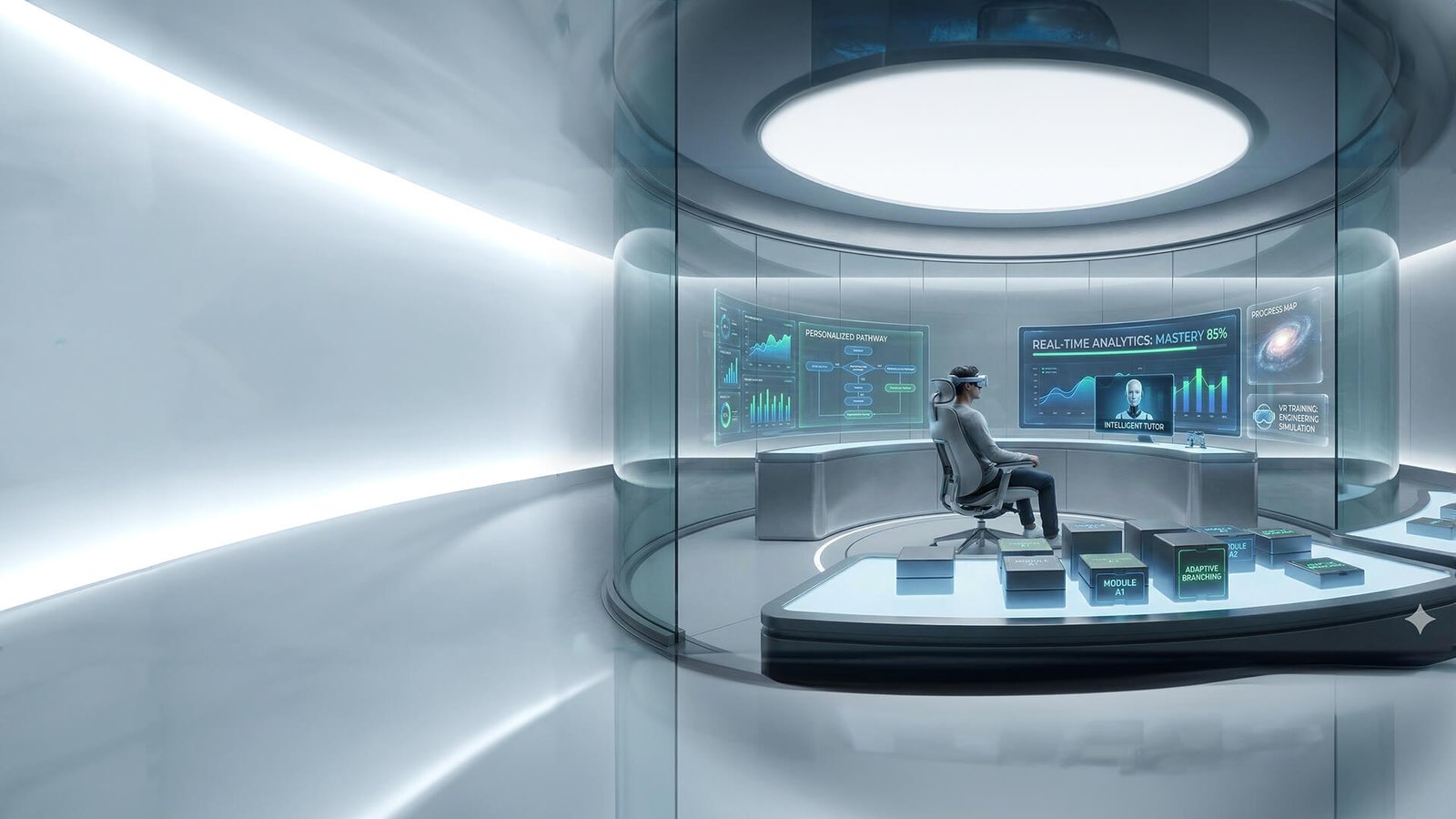
How Adaptive Learning Technology Enables Personalized Learning Paths
For decades, education and corporate training relied on the “average learner” model, delivering the same content, at the same pace, with the same assessments to diverse audiences. This approach failed the fastest learners (boredom) and the slowest learners (frustration), leading to massive inefficiencies and high attrition rates.
The emergence of AI-powered Adaptive Learning is now dismantling this model. It allows organizations to finally achieve Personalized Learning at Scale by creating Customized Learning Paths that dynamically adjust to an individual’s strengths, weaknesses, preferences, and goals. This is not merely a technological upgrade; it is a fundamental shift in pedagogy and strategy, ensuring that every minute spent learning is relevant, challenging, and effective.
I. Defining the Triad: Personalized, Adaptive, and Customized Learning
While often used interchangeably, these three terms describe distinct approaches and levels of technological sophistication in tailoring the learning experience. Understanding their differences is crucial for strategic implementation.
A. Personalized Learning (The Philosophy)
- Definition: Personalized learning is the broad educational philosophy or approach focused on catering to the unique characteristics, preferences, and long-term goals of each learner. It is learner-centered.
- Locus of Control: The Learner is primarily in control. They set goals, choose content, select the pace, and often choose the mode of assessment.
- Key Characteristics:
- Goal Alignment: Content is chosen based on the learner’s career aspirations or personal interests.
- Flexibility: Allows the learner to have a voice in the structure of the educational journey.
- Example: An employee choosing a specific certification track on a Learning Experience Platform (LXP) that aligns with their desired career promotion.
B. Adaptive Learning (The Technology)
- Definition: Adaptive learning is the technology-driven method used to achieve personalization at scale. It uses AI and algorithms to dynamically adjust content, difficulty, and sequencing in real-time based on a learner’s immediate performance and responses.
- Locus of Control: The Algorithm/System is in control.
- Key Characteristics:
- Real-time Adjustment: If a learner answers three consecutive questions incorrectly, the system automatically inserts remedial resources (video, practice questions) before allowing progression.
- Efficiency: Skips content the learner has already mastered (pre-assessment) to optimize time and focus effort only on identified gaps.
- Example: A language learning app (like Duolingo) that immediately increases difficulty when the user performs well, or repeats vocabulary when they struggle.
C. Customized Learning Paths (The Design & Architecture)
- Definition: Customized Learning Paths are the pre-designed, modular architectures that define the available journey options. They serve as the framework within which adaptive technology operates.
- Locus of Control: The Instructional Designer/Curriculum Strategist is in control.
- Key Characteristics:
- Modular Structure: Breaking down a subject into granular, tagged content units that the AI can reassemble.
- Competency Mapping: Aligning every content unit to a specific, measurable skill or competency.
- Example: The set of available courses and modules that an employee can choose from, which are then sequenced by an adaptive algorithm.
Adaptive learning is a type of technology-enabled personalized learning that allows customized paths to become dynamic and real-time.
II. The Technological Drivers: AI, ML, and Data
The scaling of personalized learning is fundamentally dependent on the maturation of technologies that can process vast amounts of data and execute complex logic instantly.
A. Artificial Intelligence (AI) and Machine Learning (ML)
AI is the engine of adaptive learning, enabling the system to act as a one-on-one tutor.
- Dynamic Adaptation (ML): Machine Learning algorithms analyze millions of data points across all learners to identify patterns of success and failure. This training allows the system to predict, “If Learner A struggles with Concept X, the optimal intervention is Resource Y.” This prediction guides the dynamic content adjustment.
- Intelligent Tutoring Systems (AI Tutors): AI tutors use Natural Language Processing (NLP) and Conversational AI to provide on-demand support. They can answer complex questions, provide feedback on written essays, and guide students through complex topics 24/7, replicating the support of a human tutor.
- Predictive Analytics: Systems use AI to track engagement, attendance, and assessment data to identify “at-risk” students (those likely to drop out or fail) before issues escalate, allowing human educators to intervene proactively.
B. Data Models and Interoperability
The efficiency of adaptive learning depends on standardized data collection and analysis.
- The Learner Model: This is the dynamic profile built for each student, continually updated with real-time feedback, demographic data, and assessment responses. This model is the core data asset that dictates the customized path.
- xAPI and cmi5 Standards: Modern L&D systems are shifting away from older standards like SCORM to xAPI (Experience API) and cmi5. These standards allow for granular tracking of learning experiences across multiple platforms (LMS, simulations, mobile apps), providing the rich, interconnected data required to feed the adaptive algorithms.
C. Immersive Technologies (AR/VR)
Adaptive learning is moving beyond 2D content into immersive environments.
- Adaptive Scenarios: Virtual Reality (VR) simulations can be designed to change complexity based on the learner’s response. For instance, a medical student performing a simulated surgery may face a sudden complication (e.g., hemorrhage) if they master the basic steps too quickly, providing an adaptive challenge in a risk-free environment.
- Kinesthetic Data: AR/VR allows the collection of data on physical and procedural performance (e.g., eye-tracking, movement speed, sequence of actions), enabling the AI to tailor the next practice session based on physical, not just cognitive, weakness.
III. Sectoral Impact: K-12, Higher Ed, and Corporate Training
The adoption of customized learning paths is driven by distinct strategic goals across different sectors.
A. K-12 Education: Equity and Mastery
- Goal: Bridge achievement gaps, boost engagement, and ensure mastery before progression.
- Benefits:
- Mastery over Pacing: Students progress only after demonstrating competency, eliminating the failure of moving a student forward before they are ready.
- Increased Engagement: Students gain ownership over their learning, choosing subjects and projects that align with their interests, boosting confidence and engagement.
- Teacher Empowerment: AI automates repetitive tasks like grading and basic remediation, freeing teachers to focus on high-value, human-centric activities like one-on-one coaching, mentorship, and social-emotional development.
B. Corporate Training: Efficiency and Time-to-Proficiency
- Goal: Accelerate skill development, optimize training efficiency, and maximize return on investment (ROI).
- Benefits:
- Faster Onboarding and Upskilling: Personalized paths skip content the employee already knows, drastically reducing the time required to onboard new hires or reskill existing employees for new roles.
- Increased Retention: By tailoring content to be role-specific and immediately relevant (contextual learning), retention is improved, and the forgetting curve is reduced.
- Measurable ROI: Personalized programs focus resources only where gaps exist, increasing training efficiency and making the performance improvement more measurable and justifiable to the business.
C. Higher Education: Accessibility and Cost Reduction
- Goal: Increase accessibility, support diverse learning populations, and reduce institutional costs.
- Benefits:
- Accessibility: Adaptive systems cater to diverse learning styles and paces, reducing achievement gaps among learners with varied backgrounds and prior knowledge.
- Lower Costs: By providing effective online, self-paced remediation and practice, institutions can potentially reduce the cost of large, standardized remedial courses while improving learner outcomes.
IV. Challenges and Ethical Considerations
The power of hyper-personalized learning is matched by the complexity of its ethical implementation, especially concerning data and bias.
A. Algorithmic Bias and Equity
- Challenge: AI algorithms are trained on historical data. If this data reflects societal or institutional biases (e.g., inequitable outcomes based on socioeconomic status or race), the algorithms can reinforce or amplify those biases, leading to unjust treatment or inequitable educational paths for marginalized individuals.
- The ID’s Role: Instructional Designers and curriculum architects must actively audit the algorithms and the source data for fairness, ensuring that the adaptive system promotes equity by closing gaps, not widening them.
B. Data Privacy, Security, and Trust
- Challenge: Adaptive learning requires massive volumes of personal data (performance, behavior, demographics) to function. This raises severe concerns about data security, privacy violations, and unauthorized access.
- Mitigation: Organizations must establish robust data management systems, implement clear anonymization procedures, and ensure full transparency and informed consent regarding how learner data is collected, stored, and used.
C. The Risk of Dehumanization and Cognitive Disengagement
- Challenge: Over-reliance on AI can reduce the essential human-to-human interaction between students and educators, potentially diminishing the development of crucial social-emotional skills, empathy, and critical thinking.
- Mitigation: The most effective models are blended learning approaches. AI handles the content delivery and remediation (the what and how), while the human educator focuses on high-value interactions—facilitating group discussion, fostering critical thinking, and providing emotional support and mentorship.
D. Cost and Implementation Barriers
- Challenge: Large-scale adaptive systems are expensive to implement and maintain, including costs for software licenses, data management infrastructure, and essential teacher/trainer professional development. This creates a significant barrier for smaller institutions and widens the digital divide for underserved communities.
The Future is Tailored
The convergence of Personalized Learning (the philosophy), Adaptive Learning (the technology), and Customized Learning Paths (the design framework) marks the definitive direction for education and training. It is the ultimate expression of efficiency, driven by AI’s ability to analyze and react to individual human needs in real-time.
For educators, trainers, and Instructional Designers, the future is not about replacing human instruction, but about amplifying its impact. By mastering these adaptive systems and dedicating resources to ethical governance and human-centric design, organizations can move past the “one-size-fits-all” failure and successfully tailor the learning journey to realize the full potential of every single learner. The end result is a highly efficient, engaging, and demonstrably effective learning ecosystem that delivers unparalleled academic outcomes and workforce readiness.